



_1787337639892-CF-LHGuW.png)
About Us
A house built on six yards
Bawari Banno began as a counter in Mylapore in 1974. Fifty-two years on, we still buy the way we started — loom by loom, family by family.
Our Story
Bought the slow way, on purpose
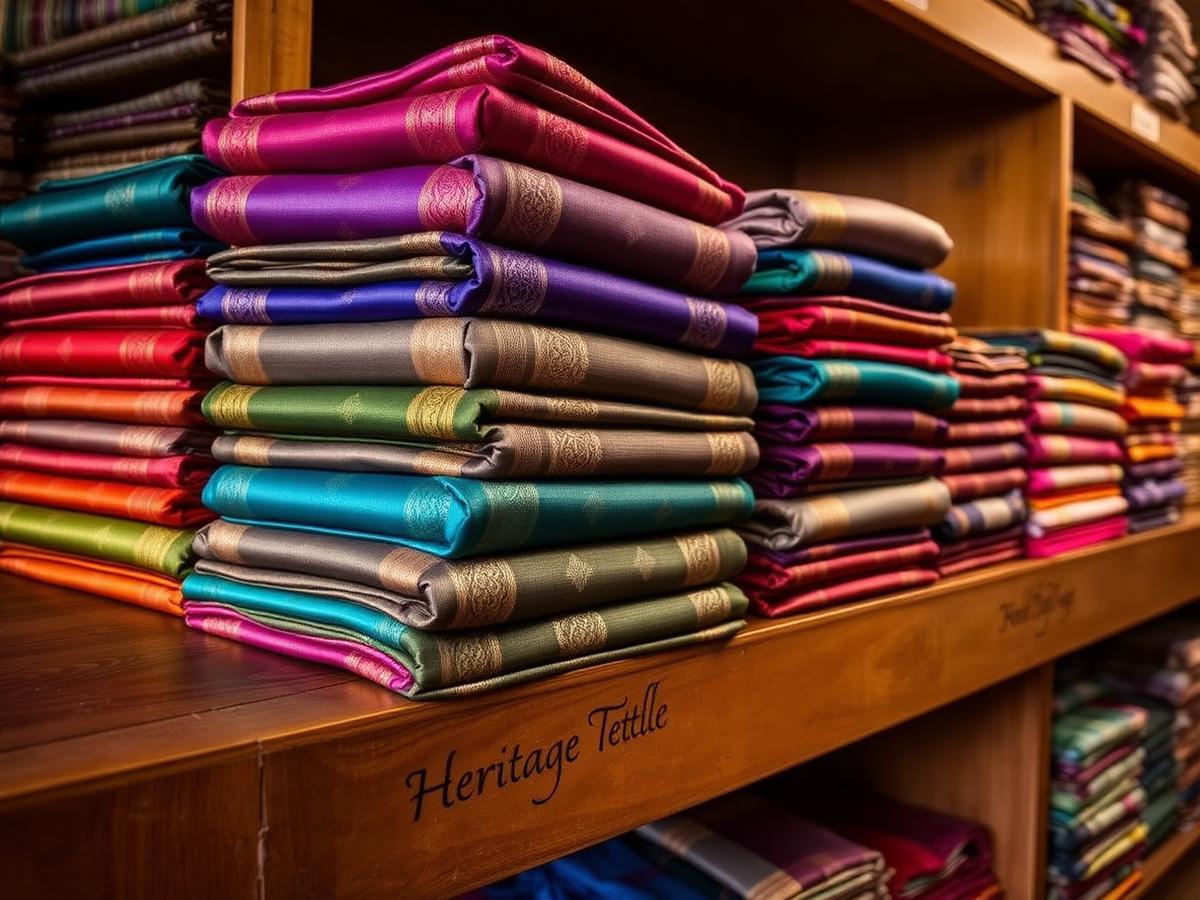
We do not buy from wholesalers. Twice a year our buyers travel to Kanchipuram, Varanasi, Bagru and Phulia, sit at the looms, and commission what they see. That means fewer sarees on our shelves — and a name attached to each one.
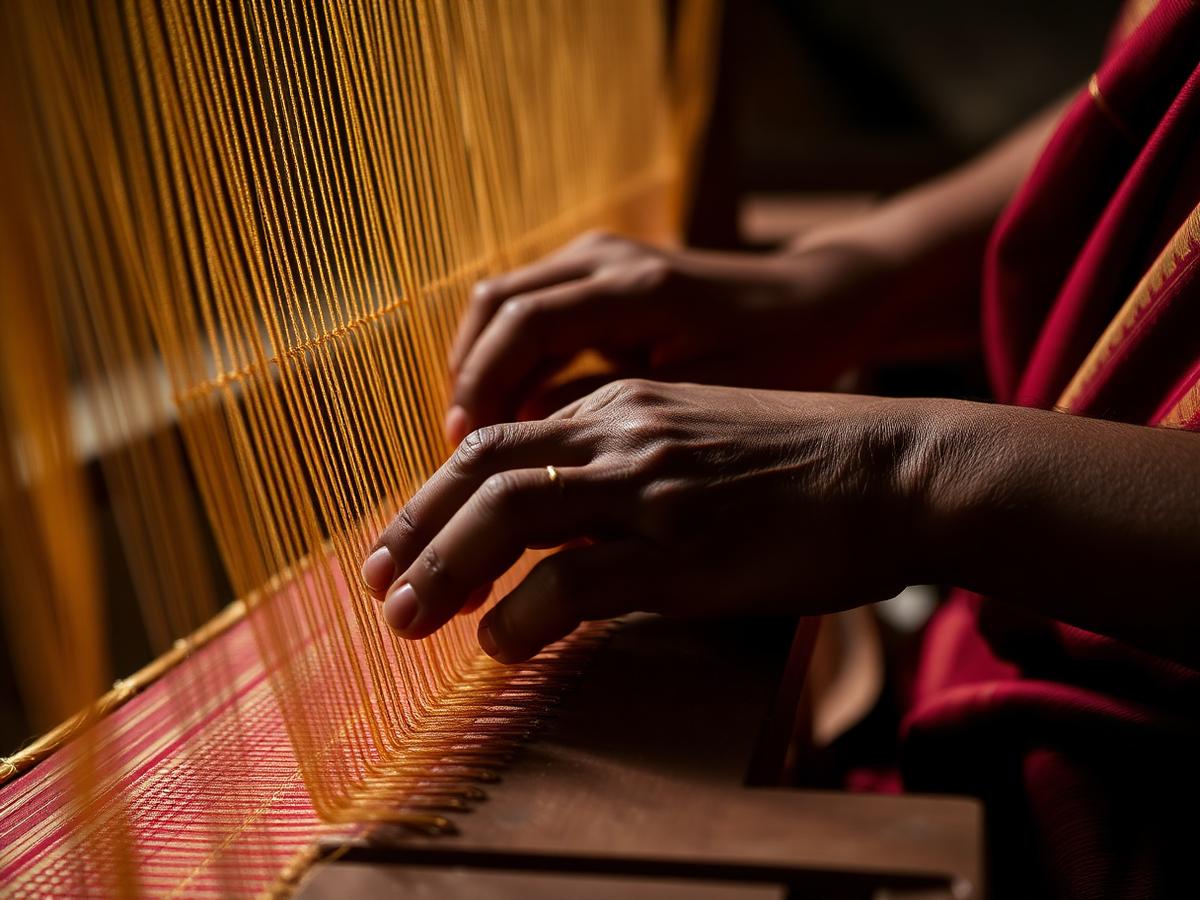
A pure zari Kanjivaram can take twenty-one days on the loom. We price it so the weaver is paid for all twenty-one, not for the fifteen a middleman would allow.
Our Craft
From cocoon to korvai border
- 01
Sourcing the yarn
Mulberry silk from Bengaluru, zari drawn in Surat.
- 02
Dyeing
Small-batch dye lots, tested for colourfastness before weaving.
- 03
The loom
Pit and jacquard looms; 18–21 days for a bridal Kanjivaram.
- 04
Finishing
Hand-knotted tassels, steam press, muslin wrap for storage.
Heritage
Fifty-two years
1974
A single counter in Mylapore, selling Kanchipuram silks on trust.
1998
Direct weaver partnerships begin in Varanasi and Bengal.
2012
The revival programme restores twelve lapsed korvai motifs.
2026
Nine weaving clusters, 240 weaver families, one atelier.
Kamala Iyer
Founder & Master Buyer
Rohan Iyer
Weave Revival Lead
Meera Das
Cluster Relations, Bengal